Understanding Riflescope Magnification for Better Accuracy
Riflescope magnification plays a critical role in shooting accuracy, target identification, and overall field performance. Whether you are hunting whitetails in thick timber, engaging steel targets at extended distances, or competing in precision rifle matches, understanding magnification helps you select the right optic for the job.
Modern riflescopes have evolved dramatically over the last decade. Premium optics manufacturers such as Nightforce, Leupold, Vortex Optics, Steiner, Burris, Trijicon, and Schmidt & Bender now offer advanced variable magnification systems with improved clarity, larger eye boxes, better low-light performance, and highly refined reticle systems.
Despite these advancements, many shooters still misunderstand how magnification actually affects accuracy and field performance. More magnification does not always mean better shooting. In many situations, excessive magnification can reduce field of view, slow target acquisition, and negatively impact real-world usability.
This guide explains how riflescope magnification works, the different magnification ranges available, how magnification affects accuracy, and how to select the ideal riflescope setup for your specific shooting application in 2026.
What Is Riflescope Magnification?
Magnification refers to how much larger a riflescope makes the target appear compared to the naked eye.
For example:
- A 3x scope makes the target appear three times closer.
- A 10x scope makes the target appear ten times closer.
Variable-power scopes allow shooters to adjust magnification levels depending on the environment and target distance.
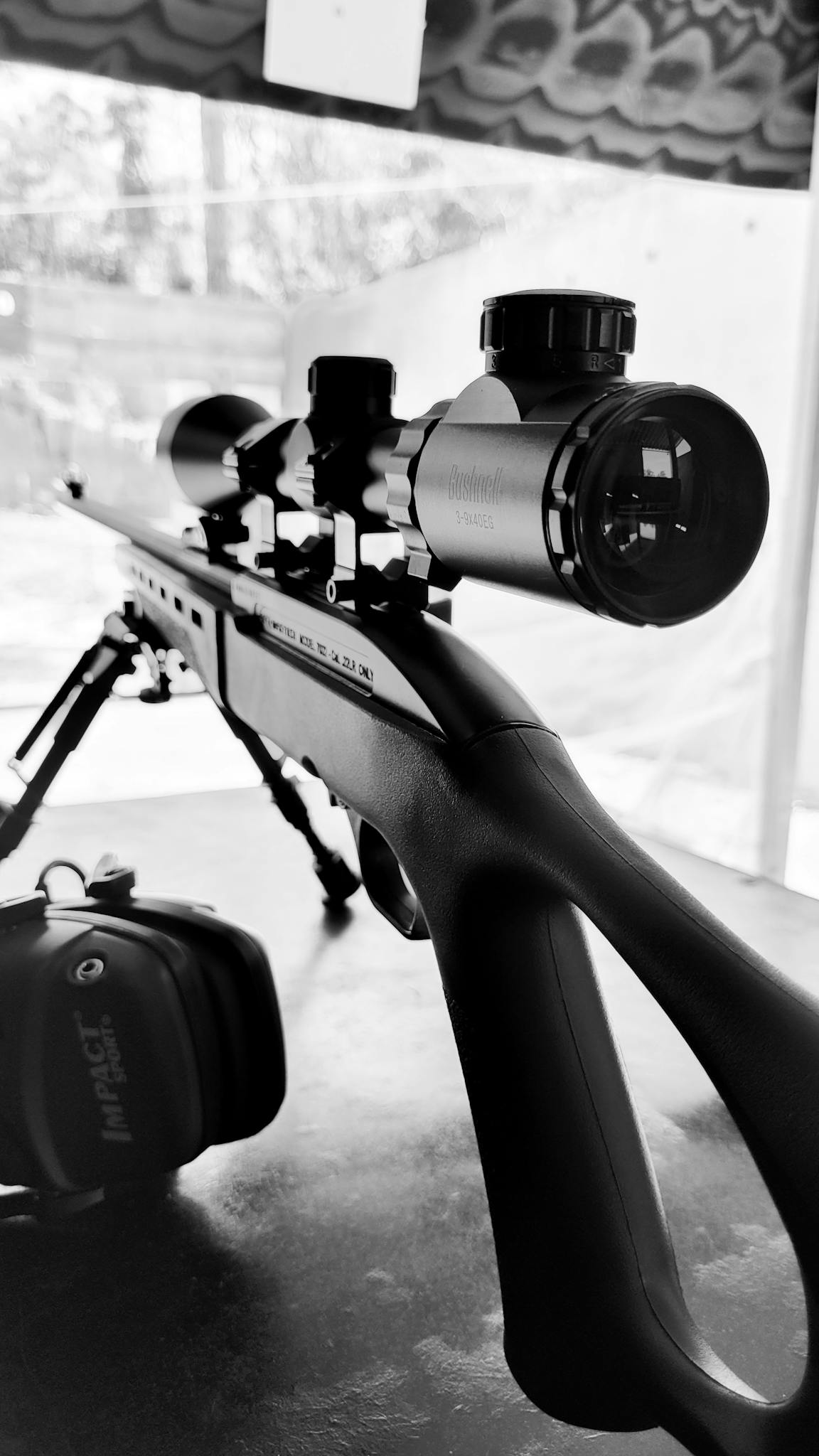
A scope labeled 3-9×40 means:
- 3x to 9x adjustable magnification
- 40mm objective lens diameter
Magnification directly influences:
- Target acquisition speed
- Target detail
- Field of view
- Eye box forgiveness
- Stability perception
Why Magnification Matters
Magnification improves the shooter’s ability to:
- Identify targets
- Observe details
- Make precise shot placement
- Read environmental conditions
- Spot impacts at distance
However, magnification must match the intended application.
Too little magnification can make long-range precision difficult, while excessive magnification may create:
- Narrow field of view
- Increased image shake
- Reduced situational awareness
- Slower target acquisition
Experienced shooters understand that practical usability matters more than simply maximizing magnification power.
Low Magnification Scopes
Low magnification scopes typically range from:
- 1-4x
- 1-6x
- 1-8x
- 2-7x
These optics excel in:
- Close-range hunting
- Dangerous game hunting
- Tactical shooting
- Fast-moving targets
- Dense timber environments
Advantages include:
- Wider field of view
- Faster target acquisition
- Better situational awareness
- Improved performance on moving targets
Low-power variable optics (LPVOs) have become extremely popular among tactical shooters and modern sporting rifle users.
Manufacturers such as Vortex Optics and Trijicon continue refining LPVO systems for both civilian and professional applications.
Mid-Range Magnification Scopes
Mid-range scopes commonly include:
- 3-9x
- 4-12x
- 4-16x
These remain some of the most versatile riflescope configurations available.
Mid-range optics perform exceptionally well for:
- General hunting
- Predator hunting
- Recreational shooting
- Medium-range precision
- Ranch and property use
A 3-9x scope remains one of the most popular hunting configurations because it balances:
- Field of view
- Practical magnification
- Compact size
- Weight efficiency
Leupold and Burris continue producing highly respected mid-range hunting optics trusted by generations of hunters.
High Magnification Scopes for Long-Range Shooting
High magnification optics generally range from:
- 5-25x
- 7-35x
- 8-40x
These scopes are designed primarily for:
- Long-range precision shooting
- Competition shooting
- ELR (Extreme Long Range)
- Benchrest shooting
Advantages include:
- Improved target detail
- Easier spotting of impacts
- Better observation of mirage
- Enhanced precision at extended distances
However, higher magnification also introduces challenges:
- Reduced field of view
- Increased image wobble
- Smaller forgiving eye boxes
- More difficult target acquisition
Nightforce and Schmidt & Bender remain leading brands in the premium long-range optics market.
How Magnification Affects Accuracy
Magnification affects accuracy in several ways.
Target Identification
Higher magnification improves the shooter’s ability to identify precise aiming points.
Reticle Precision
Increased target size helps shooters place reticles more accurately.
Environmental Awareness
Excessive magnification can reduce awareness of surrounding conditions and moving targets.
Perceived Movement
Higher magnification exaggerates body movement and rifle instability, which may negatively affect inexperienced shooters.
The ideal magnification level balances precision with practical usability.
Understanding Field of View
Field of view refers to the visible area seen through the riflescope at a specific distance.
As magnification increases:
- Field of view decreases
As magnification decreases:
- Field of view increases
Wider field of view helps:
- Track moving targets
- Improve situational awareness
- Speed up target acquisition
Narrow field of view becomes more challenging during:
- Dynamic shooting scenarios
- Fast engagements
- Thick terrain
First Focal Plane vs Second Focal Plane
Reticle placement significantly affects magnification usability.
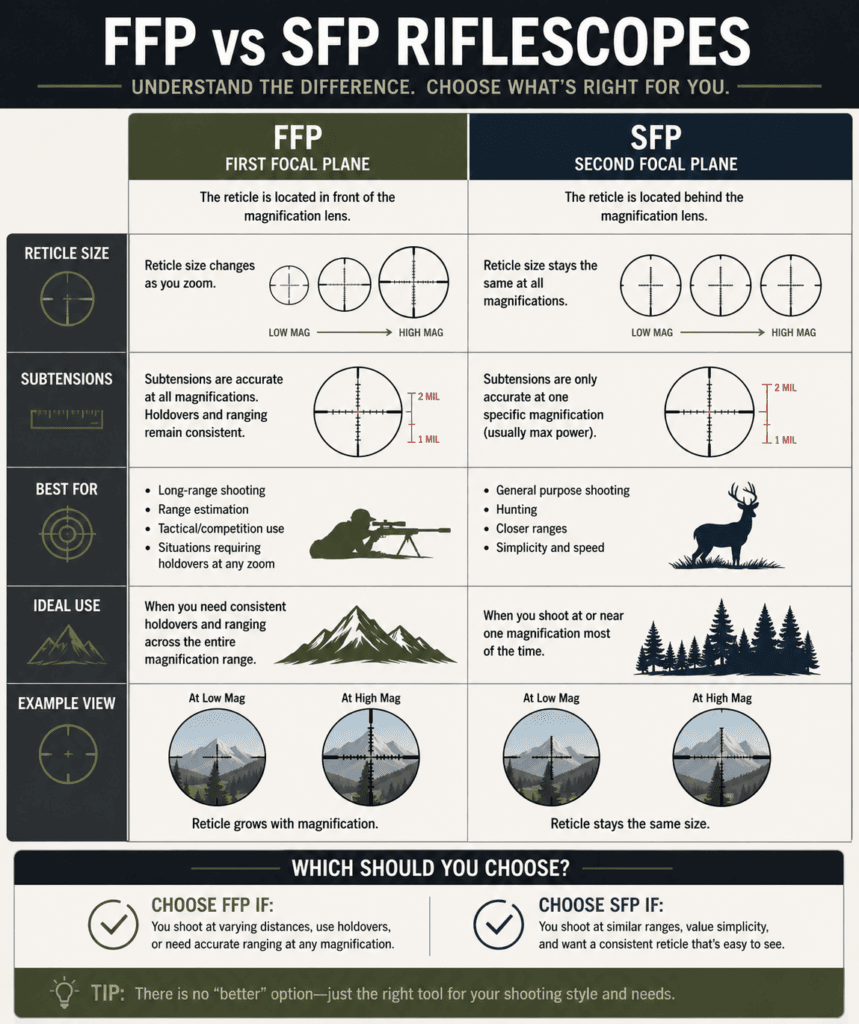
First Focal Plane (FFP)
The reticle changes size with magnification.
Advantages:
- Accurate holdovers at all magnifications
- Better for precision shooting
- Preferred for long-range applications
Second Focal Plane (SFP)
The reticle remains the same size regardless of magnification.
Advantages:
- Cleaner sight picture
- Easier visibility at low power
- Popular for hunting
Precision shooters often prefer FFP optics, while hunters frequently favor SFP systems.
Parallax and Magnification
Parallax becomes increasingly important at higher magnification levels.
Parallax occurs when the reticle appears to move relative to the target due to eye misalignment.
Adjustable parallax systems help:
- Improve focus
- Eliminate aiming errors
- Increase consistency
Most modern high-magnification optics feature side-focus parallax adjustment systems.
Eye Relief and Eye Box Considerations
As magnification increases, eye box forgiveness often decreases.
This means shooters must maintain more precise head positioning.
Proper eye relief improves:
- Comfort
- Recoil safety
- Faster sight acquisition
- Shooting consistency
Premium optics manufacturers continue improving eye box performance even at higher magnification levels.
Choosing the Right Magnification for Hunting
Hunters should choose magnification based on:
- Terrain
- Target size
- Typical shooting distance
- Lighting conditions
Dense Woods
Low magnification performs best.
Open Terrain
Mid- to higher-range magnification may provide advantages.
Western Hunting
Many western hunters prefer 4-16x or 5-25x configurations for long-distance shots across open country.
Choosing Magnification for Tactical and Precision Shooting
Precision and tactical shooters often prioritize:
- Variable magnification
- FFP reticles
- Advanced hold systems
- Reliable tracking
Popular precision configurations include:
- 5-25×56
- 7-35×56
These setups provide excellent versatility for engaging targets across varying distances.
Top Riflescope Brands in 2026
Nightforce
Nightforce remains highly respected for precision long-range optics and rugged durability.
Leupold
Leupold continues offering lightweight and dependable hunting optics.
Vortex Optics
Vortex provides strong performance across multiple price categories and applications.
Steiner
Steiner optics are known for excellent low-light capability and rugged construction.
Trijicon
Trijicon continues producing durable optics trusted by hunters and tactical shooters.
Burris
Burris offers practical optics balancing performance and affordability.
Schmidt & Bender
Schmidt & Bender remains one of the premier precision optics manufacturers worldwide.
Common Magnification Myths
More Magnification Always Means Better Accuracy
False. Excessive magnification can hinder usability and situational awareness.
Large Scopes Are Always Superior
False. Compact optics often provide better balance and field handling.
Higher Magnification Eliminates Skill Requirements
False. Fundamentals such as breathing, trigger control, and stability remain critical.
Conclusion
Understanding riflescope magnification is essential for improving shooting accuracy and overall field performance.
The best magnification depends on:
- Intended application
- Shooting distance
- Environmental conditions
- Shooter experience
- Rifle platform
Modern optics manufacturers such as Nightforce, Leupold, Vortex Optics, Steiner, Trijicon, Burris, and Schmidt & Bender continue advancing riflescope technology in 2026, offering shooters highly capable optics across every application category.
By understanding how magnification impacts field of view, stability, eye relief, target acquisition, and precision, shooters can make more informed decisions and improve real-world shooting performance.