Precision Target Shooting
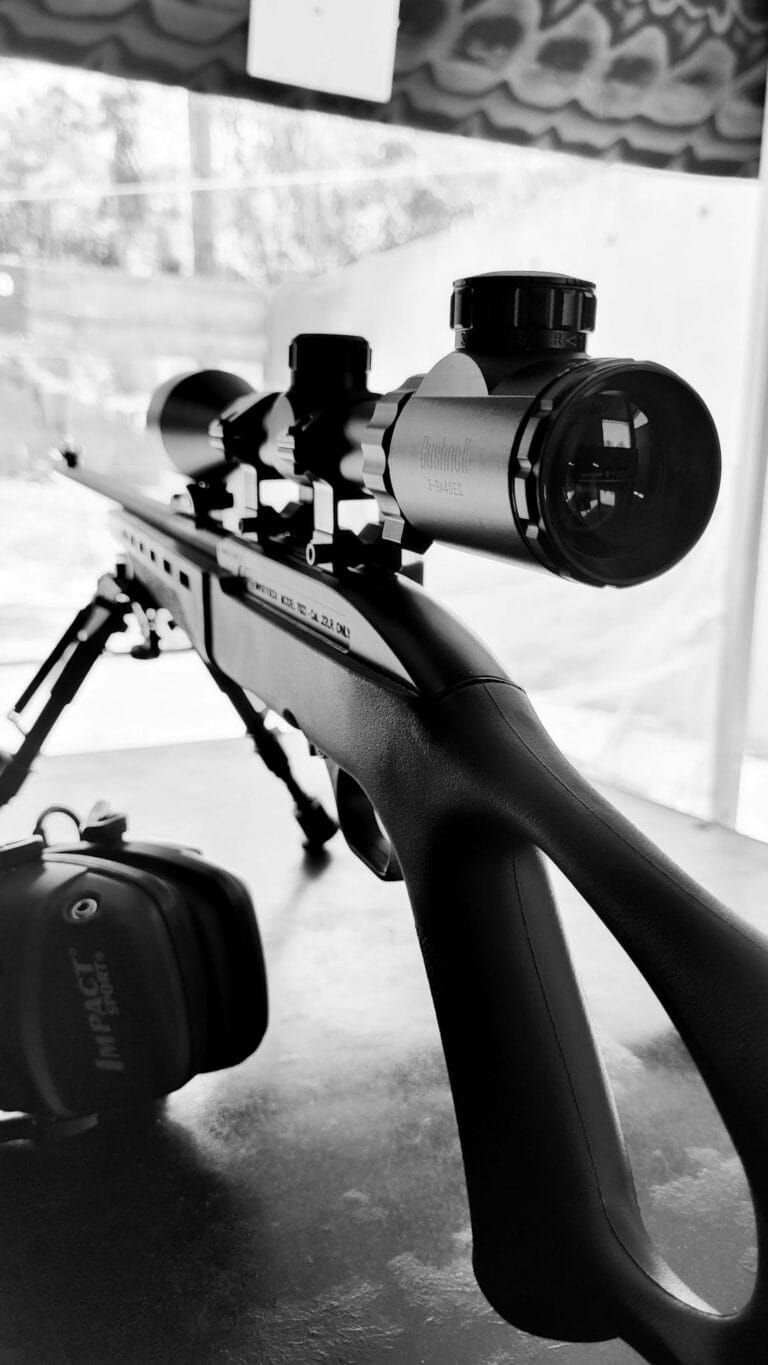
Choosing the right riflescope can dramatically improve shooting accuracy, consistency, and overall confidence behind the rifle. Whether you are a competitive shooter, long-range enthusiast, recreational marksman, or precision hunter, understanding the features that matter most in a riflescope is important to maximize performance.
Modern riflescopes have evolved far beyond basic magnified optics. Today’s premium optics integrate advanced reticle systems, superior glass quality, precision adjustment mechanisms, weatherproof construction, and intelligent optical engineering designed to help shooters engage targets faster and more accurately across varying distances and conditions.
Brands such as Nightforce, Vortex Optics, Leupold, Steiner, Burris, and Schmidt & Bender continue pushing riflescope innovation forward in 2026. With so many options available, selecting the best riflescope often comes down to understanding which features actually improve real-world shooting performance.
This guide explains the most important riflescope features for precision target shooting, including magnification, reticle design, parallax adjustment, lens quality, turret systems, durability considerations, and additional user-focused enhancements that improve the overall shooting experience.
Why Riflescope Features Matter
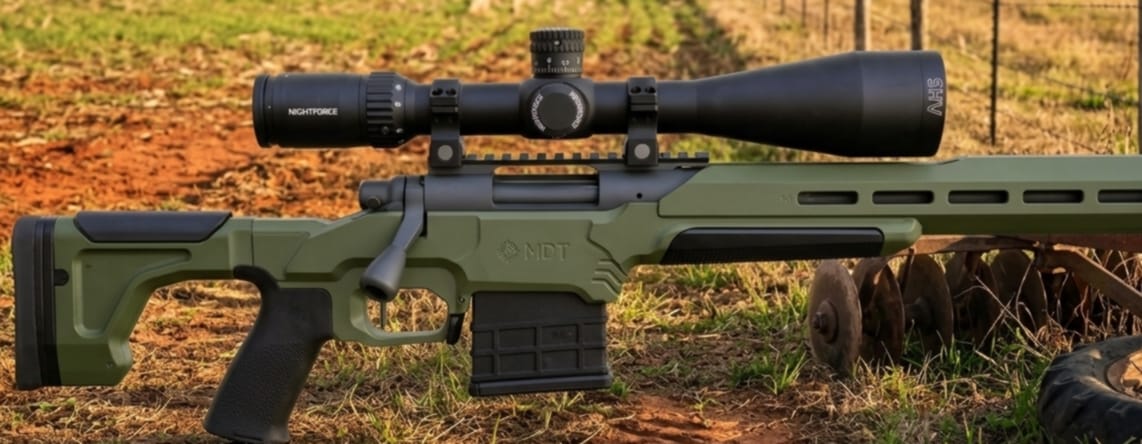
A riflescope is more than a simple magnification tool. The right optic becomes an extension of the shooter, helping improve consistency, target acquisition, and confidence under varying conditions.
Poor glass quality, unreliable turret tracking, weak illumination systems, or inconsistent parallax adjustment can negatively affect precision shooting performance. Conversely, high-quality optics improve image clarity, allow more accurate corrections, and help shooters identify targets quickly and confidently.
For competitive shooters and long-range enthusiasts, consistency matters. Repeatable adjustments, durable construction, and reliable optical performance become critical when engaging small targets at extended distances.
Understanding Magnification for Target Shooting
Magnification remains one of the most important riflescope features for precision shooting. However, more magnification does not always mean better performance.
Lower magnification ranges such as 3-9x or 4-16x often provide greater versatility and wider field of view. These optics work exceptionally well for practical shooting applications, hunting, and shorter-range target work.
Higher magnification optics such as 5-25x, 7-35x, or even 8-40x become increasingly useful for precision long-range shooting where detailed target observation matters. Competitive shooters engaging targets beyond 600 yards frequently benefit from additional magnification when reading impacts, spotting trace, or refining precise aiming points.
Variable magnification scopes provide flexibility for changing shooting conditions. Premium models from brands like Nightforce and Vortex allow shooters to transition between close-range and long-range engagements without sacrificing image quality.
Fixed-power optics still maintain advantages in simplicity, durability, and often optical clarity. Many precision shooters appreciate the reliability and consistent eye box associated with fixed magnification systems.
The Importance of Reticle Design
Reticle design directly impacts target acquisition speed, holdover capability, and precision correction.
Modern precision riflescopes commonly use first focal plane (FFP) reticles because the reticle subtensions remain accurate throughout the magnification range. This allows shooters to make accurate holds regardless of zoom level.
Popular reticle systems include:
- Mil-based reticles
- MOA reticles
- Christmas tree reticles
- Horus-style grid reticles
- BDC reticles
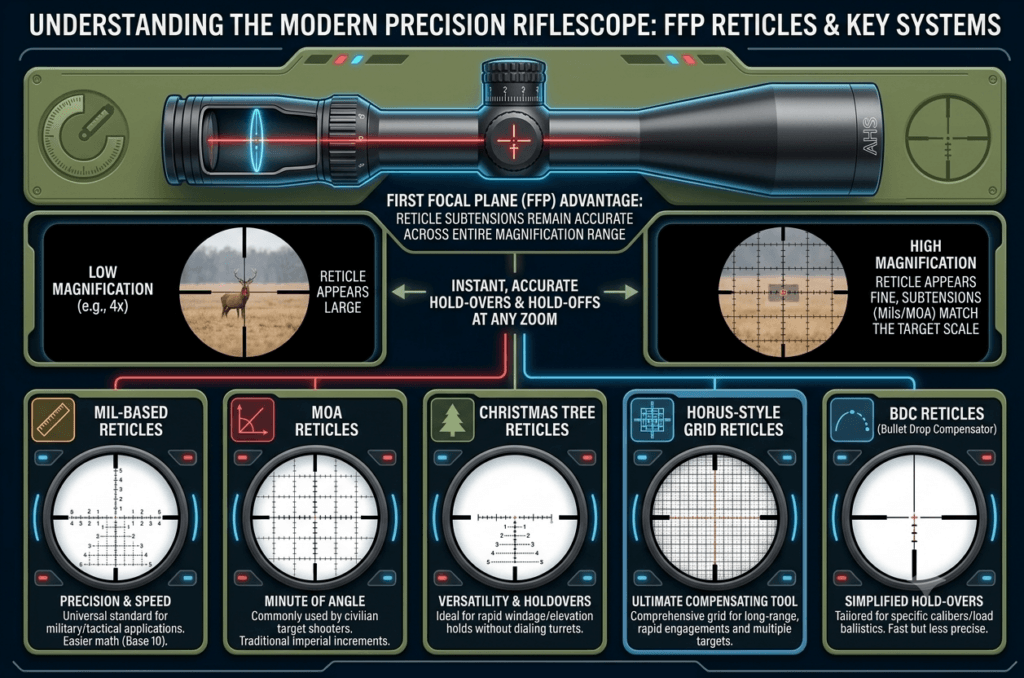
Mil reticles remain extremely popular among precision rifle shooters due to their versatility and ease of communication for spotting corrections.
Christmas tree reticles provide rapid elevation and wind holds without dialing turrets, making them valuable during competitions and dynamic shooting scenarios.
BDC reticles continue serving recreational shooters and hunters who want simplified holdover references at varying distances.
Illuminated reticles also improve visibility during low-light conditions and help separate the aiming point from dark backgrounds.
Lens Quality and Optical Performance
Lens quality remains one of the biggest differentiators between entry-level and premium riflescopes.
High-quality glass improves:
- Resolution
- Contrast
- Edge-to-edge clarity
- Color fidelity
- Low-light performance
Premium optics manufacturers such as Schmidt & Bender, Steiner, and Nightforce use advanced lens coatings and high-transmission glass systems to maximize optical performance.
Fully multi-coated lenses reduce glare, improve light transmission, and help maintain sharp image quality during difficult lighting conditions.
Objective lens size also affects performance. Larger objective lenses gather more light, improving visibility during dawn, dusk, and low-light shooting environments. However, excessively large objective lenses can increase weight and mounting height.
Optical clarity becomes especially important during long-range shooting where shooters must identify small targets, observe mirage, and read environmental conditions accurately.
Parallax Adjustment Explained
Parallax adjustment is one of the most misunderstood yet important riflescope features for precision shooting.
Parallax occurs when the reticle appears to shift relative to the target when the shooter changes head position behind the optic. At extended distances, even small parallax errors can negatively impact accuracy.
Adjustable parallax systems allow shooters to fine-tune focus based on target distance. Most modern precision riflescopes use side-focus parallax adjustment knobs because they provide quick and convenient access during shooting.
Proper parallax adjustment helps:
- Improve target sharpness
- Reduce aiming error
- Improve consistency
- Maintain accurate point of aim
Shooters engaging targets beyond 300 yards should strongly prioritize optics with adjustable parallax systems.
Turret Systems and Tracking Reliability
Turret quality plays a major role in precision shooting success.
Reliable elevation and windage adjustments allow shooters to dial corrections confidently without worrying about tracking inconsistencies.
Premium turret systems provide:
- Positive tactile clicks
- Accurate return-to-zero capability
- Repeatable tracking
- Clear adjustment markings
Zero-stop systems have become increasingly common in premium optics because they allow shooters to quickly return to their baseline zero after dialing elevation adjustments.
Many long-range shooters prefer exposed tactical turrets for rapid adjustment capability, while hunters often favor capped turrets to reduce accidental movement in the field.
Tracking consistency remains critical. Even slight tracking errors become magnified during long-range shooting applications.
Build Quality and Durability
Precision riflescopes must withstand recoil, environmental exposure, transportation abuse, and changing weather conditions.
High-quality riflescopes commonly feature:
- Aircraft-grade aluminum housings
- Waterproof sealing
- Fog-proof nitrogen or argon purging
- Shock-resistant construction
- Scratch-resistant coatings
Durability becomes especially important for shooters who train frequently, travel for competitions, or operate in harsh outdoor environments.
Brands like Nightforce and Steiner have built strong reputations for rugged reliability under demanding conditions.
A riflescope that loses zero or suffers internal failures can immediately compromise shooting performance and confidence.
Eye Relief and Shooter Comfort
Eye relief significantly affects both comfort and safety.
Adequate eye relief helps prevent scope bite during recoil and allows shooters to maintain a consistent shooting position behind the optic.
Most modern riflescopes provide approximately 3.5 to 4 inches of eye relief, which works well across a wide range of calibers.
A forgiving eye box also improves usability by allowing shooters to acquire a full sight picture more quickly. This becomes especially valuable during practical shooting competitions or hunting scenarios where rapid target engagement matters.
Modern Features Improving User Experience
Modern riflescopes continue evolving with user-focused enhancements that improve efficiency and usability.
Some of the most useful modern features include:
- Locking turrets
- Throw levers for magnification adjustment
- Integrated bubble levels
- Digital ballistic integration
- Tool-less zero reset systems
- Enhanced illumination controls
Quick-focus eyepieces also allow shooters to rapidly sharpen reticle clarity for improved target acquisition.
Side-focus controls provide faster parallax adjustments without breaking shooting position.
These seemingly small improvements often create noticeable performance benefits during real-world shooting conditions.
Top Riflescope Brands in 2026
Several optics manufacturers continue leading the precision riflescope market in 2026.
Nightforce
Nightforce remains highly respected for rugged durability, repeatable tracking, and exceptional long-range performance.
Vortex Optics
Vortex continues offering strong value across multiple price categories while maintaining excellent warranty support.
Leupold
Leupold optics remain popular among hunters and precision shooters thanks to lightweight designs and dependable optical performance.
Steiner
Steiner riflescopes provide excellent low-light capability and rugged construction suited for demanding environments.
Schmidt & Bender
Schmidt & Bender remains one of the premier premium optics manufacturers known for elite optical quality and precision engineering.
Burris
Burris continues delivering capable riflescope options that balance performance and affordability.
How to Choose the Right Riflescope
The best riflescope depends heavily on intended use.
Competitive precision shooters often prioritize:
- FFP reticles
- Precise tracking
- High magnification
- Zero-stop turrets
- Advanced reticle systems
Hunters may prioritize:
- Lightweight construction
- Low-light performance
- Simpler controls
- Compact design
Recreational shooters frequently benefit from versatile mid-range optics that balance affordability with dependable performance.
Budget should also be considered realistically. While premium optics provide measurable advantages, many mid-tier riflescopes now deliver excellent real-world performance for most applications.
Conclusion
Understanding riflescope features is essential for improving precision shooting performance in 2026. Features such as magnification range, reticle design, lens quality, turret reliability, parallax adjustment, and overall durability directly impact accuracy and confidence behind the rifle.
Today’s optics market offers more capable riflescopes than ever before. Whether selecting a premium long-range optic from Nightforce or Schmidt & Bender or choosing a versatile mid-range option from Vortex or Leupold, focusing on practical performance characteristics will help shooters make better purchasing decisions.
Ultimately, the best riflescope is the one that aligns with your shooting goals, intended use, and field conditions while delivering dependable repeatable performance every time you get behind the rifle.