
Best Thermal Scopes Under $3,000 in 2026: What Hunters Get for the Money
Overview
The best thermal scopes under $3,000 are not defined by one specification. Strong current options include the Pulsar Thermion 2 XQ50 Pro, AGM Rattler V3 LRF 35-384, NOCPIX BOLT L35R, NOCPIX SLIM H35, and ATN ThOR 6 Mini 640 models. The right choice depends on terrain, base magnification, sensor resolution, field of view, rangefinding needs, battery design, and price at the time of purchase.
What $3,000 Buys in Today’s Thermal Market
Thermal riflescopes under $3,000 now cover a much wider performance range than they did only a few product generations ago. A hunter can choose between compact 384-class sights, integrated laser-rangefinder models, traditional 30 mm scope-body formats, and even selected 640-class systems when pricing falls below the threshold. That makes the category competitive, but it also makes simple “best scope” lists less useful unless the products are tied to actual field use.
The practical question is not which optic has the longest specification sheet. It is which combination of native magnification, field of view, thermal sensitivity, sensor resolution, battery system, mounting interface, and controls best fits the property you hunt. A wide-view 384-class optic can be a better tool in timber and smaller fields than a higher-magnification scope designed around open country.
Five Strong Options Under $3,000
| Model | Current Listed Price* | Sensor | Base Magnification | Why It Stands Out |
| Pulsar Thermion 2 XQ50 Pro | $1,999 | 384×288 | 3× | Traditional 30 mm scope format, <25 mK sensor NETD, dual-battery architecture |
| AGM Rattler V3 LRF 35-384 | $2,595 | 384×288 | 3.5× | Integrated 1,000 m LRF, sub-15 mK sensor, removable battery |
| NOCPIX BOLT L35R | $1,999 | 384×288 | 3.5× | Integrated 1,300 yd LRF, ≤20 mK, dual power approach |
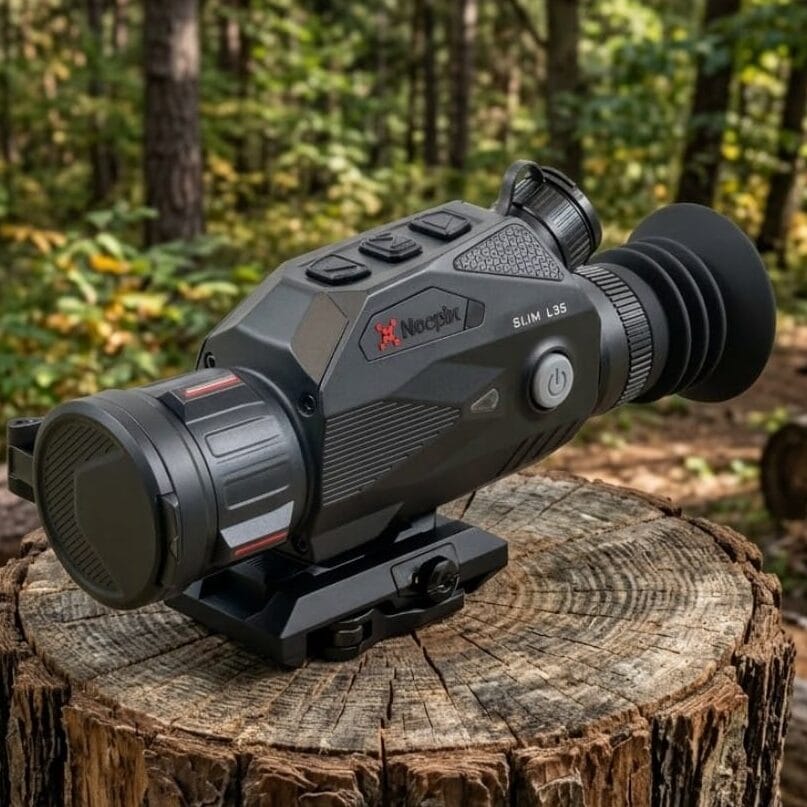
| NOCPIX SLIM H35 | $2,799 | 640×512 | 2× | 50 Hz, f/1.0 objective, conventional eyepiece-focused sight format |
| ATN ThOR 6 Mini 640 3-24x | $2,895 | 640×480 | 3× | 640-class sensor below the price cap, recording and smart-scope features |
*Prices are manufacturer-listed or official-channel prices found during research in October 2026 and can change. Always verify current pricing before purchasing.
Pulsar Thermion 2 XQ50 Pro: Best for Traditional Riflescope Ergonomics
The Thermion 2 XQ50 Pro is a good example of why 384-class optics remain relevant. Pulsar lists a 384×288 sensor, <25 mK sensor NETD, 50 Hz refresh rate, 3–12× magnification, a 50 mm f/1.0 lens, and a 7.5-degree horizontal field of view. Its 30 mm tube body allows ring mounting in a configuration that feels familiar to hunters coming from conventional daytime glass.
For a hunter working mixed fields, wooded edges, or established bait locations, the value is in the balance. The scope offers enough base magnification to make animals appear useful at distance without forcing the user into an extremely narrow field of view. Pulsar also specifies a dual-battery system and an operating range down to -13°F, useful considerations for longer winter nights.
AGM Rattler V3 LRF 35-384: Best Value for an Integrated Rangefinder
AGM’s Rattler V3 LRF 35-384 combines a 384×288 detector, 35 mm lens, 3.5× base magnification, 50 Hz refresh rate, and a published NETD below 15 mK. The built-in laser rangefinder is rated to 1,000 meters, and the scope uses a replaceable rechargeable battery system.
The tradeoff is field of view. AGM lists 7.5° × 4.5°, which fits open fields and longer sightlines better than very close cover. If your average shot opportunity is across a pasture, crop field, or long trail, that profile makes sense. If most animals appear close and move quickly across narrow windows, a lower base magnification may be more forgiving.
Source: AGM Rattler V3 LRF 35-384
NOCPIX BOLT L35R: Best Budget LRF Package
The BOLT L35R is one of the more aggressive value plays in the current market. NOCPIX lists a 384×288, 12 μm sensor, 50 Hz frame rate, sensitivity of ≤20 mK, 3.5× optical magnification, integrated 1,300-yard rangefinder, and an internal-plus-removable battery setup. The manufacturer-listed price is $1,999.
For hog and predator hunters who want ranging without moving between multiple devices, that integrated LRF is the reason to consider it. The scope also lists IP67 ingress protection and a published operating range from -4°F to 122°F. Those specifications do not make it automatically better than competing scopes, but they make the value proposition easy to understand.
Source: NOCPIX BOLT L35R
NOCPIX SLIM H35: Best for Image-First 640-Class Performance
The SLIM H35 uses a 640×512 detector, 35 mm f/1.0 objective, 2× optical magnification, and 50 Hz frame rate. A faster f/number can help the system deliver more infrared energy to the sensor, although final image quality still depends on the detector, processing, focus, display, and environmental conditions.
This scope fits a buyer who cares less about adding an integrated rangefinder and more about a fast objective, 50 Hz image, and conventional dedicated thermal-sight workflow. It also serves as a reminder that sensor resolution alone does not define the quality of the view.
Source: NOCPIX SLIM H35
ATN ThOR 6 Mini 640 3-24x: Best 640-Class Entry Under the Cap
ATN currently lists the ThOR 6 Mini 640 3-24x at $2,495. That matters because 640-class sensor systems typically sit above the $3,000 threshold. The optic combines a 640×480 detector with 3× native magnification and a broad digital feature set.
The main reason to step into 640 is not simply that the number is larger. A higher-resolution detector captures more spatial samples across the scene, which can preserve more detail when the image is digitally magnified. Teledyne FLIR notes that resolution directly affects how much detail an imaging system can resolve. Hunters still need to weigh that advantage against field of view, battery demands, interface preferences, and overall handling.
Source: ATN ThOR 6 Mini 640 3-24x
How to Choose Between These Scopes
Bottom Line
The sub $3,000 thermal market is no longer a compromise category. It contains capable 384 class optics with excellent sensitivity, dedicated LRF models, and select 640 class systems. The best buy is the one that gives you the right field of view, magnification, image detail, and battery life for the property you actually hunt.
If you are building a thermal setup from scratch, start with terrain and typical shot distance, then choose the sensor and feature package. Buying by application is more reliable than buying by one impressive specification.
AFFILIATE DISCLAIMER
Some of the links on this page are affiliate links. This means we may earn a commission at no additional cost to you if you make a purchase. This helps support our content and allows us to continue providing in-depth reviews and guides.