Thermal Imaging Is Transforming Search and Rescue
Thermal imaging technology has fundamentally changed how search and rescue teams operate in low-visibility and high-risk environments. What was once considered highly specialized military technology has now become an essential tool for emergency responders, law enforcement agencies, wilderness rescue teams, fire departments, drone operators, and disaster recovery organizations worldwide.
Modern thermal imaging devices allow rescuers to detect heat signatures in complete darkness, through smoke, light fog, dense brush, and difficult terrain where traditional visual search methods often fail. This capability dramatically improves response times, enhances situational awareness, and increases the likelihood of locating missing or injured individuals during critical rescue windows.
As thermal imaging technology continues advancing in 2026, leading manufacturers such as Pulsar, Teledyne FLIR, Trijicon, Nocpix, AGM Global Vision, and DJI continue developing more compact, sensitive, and reliable thermal systems optimized for search and rescue applications.
This guide explores how thermal imaging works, why it has become so important in modern rescue operations, the technologies driving its growth, and the real-world advantages thermal systems provide during emergency response situations.
Why Thermal Imaging Matters in Search and Rescue
Search and rescue operations often occur under the most difficult environmental conditions imaginable.
Rescue teams may need to locate:
- Missing hikers
- Injured hunters
- Lost children
- Disaster victims
- Avalanche survivors
- Flood victims
- Elderly individuals with dementia
- Individuals trapped after natural disasters
Traditional search methods relying on flashlights, visual scanning, or standard optics can become ineffective during:
- Night operations
- Heavy smoke
- Dense vegetation
- Adverse weather
- Mountain terrain
- Disaster debris fields
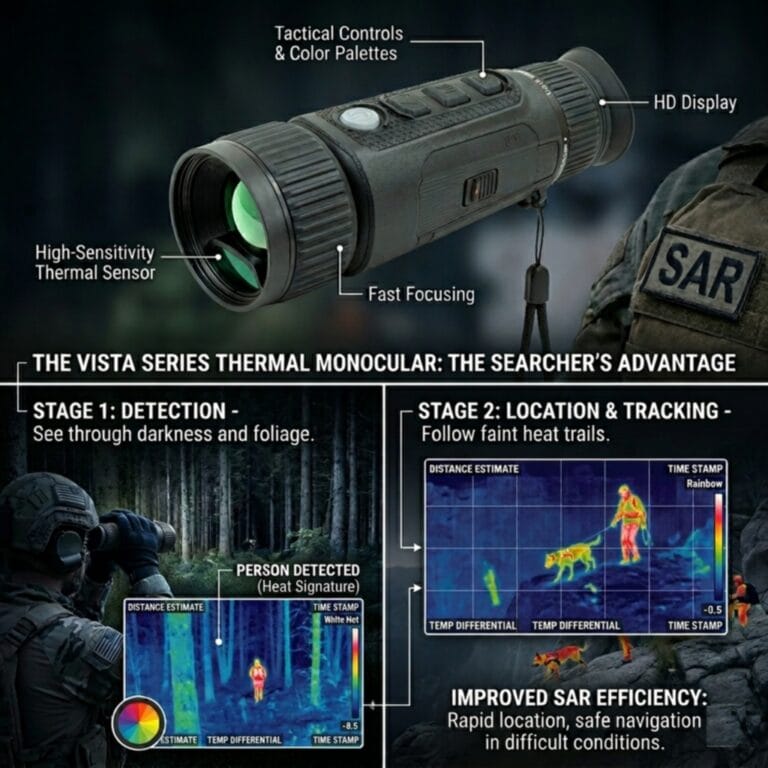
Thermal imaging dramatically improves detection capability by identifying heat signatures rather than relying on visible light.
This gives responders the ability to:
- Improve team safety and awareness
- Detect people hidden by terrain
- Locate victims in darkness
- Identify body heat through light foliage
- Scan large areas more efficiently
How Thermal Imaging Technology Works
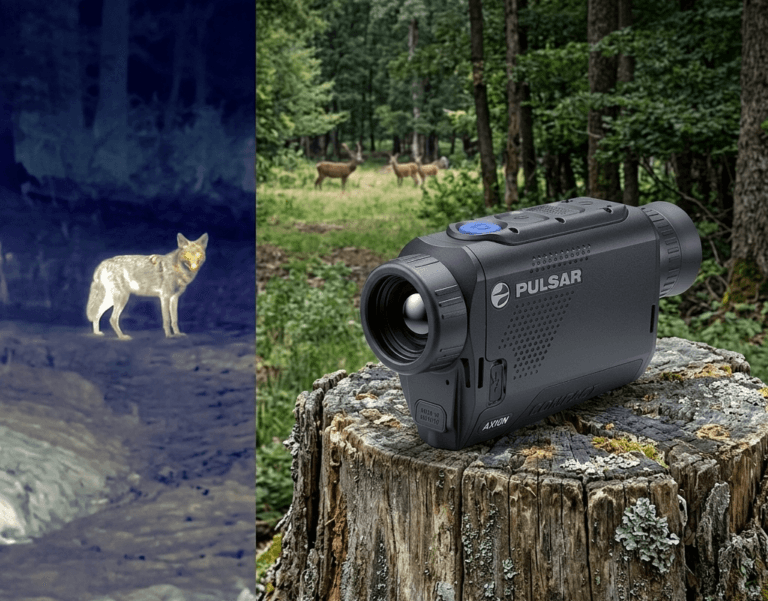
Thermal imaging devices detect infrared radiation emitted by objects and living beings.
Every object with a temperature above absolute zero emits infrared energy. Thermal sensors capture these heat signatures and convert them into visible thermal images.
Warmer objects typically appear brighter or differently colored depending on the selected thermal palette.
Modern thermal systems use:
- Uncooled thermal sensors
- Advanced image processing
- OLED displays
- AI-assisted contrast enhancement
- High-refresh-rate imaging
Unlike traditional night vision devices, thermal optics do not require ambient light.
This allows thermal imaging to function effectively during:
- Heavy overcast weather
- Moonless nights
- Smoke-filled environments
- Foggy conditions
- Dust storms
Key Advantages of Thermal Imaging in Rescue Operations
Rapid Target Detection
Thermal imaging allows rescuers to identify heat signatures quickly, reducing search times during critical emergencies.
Enhanced Situational Awareness
Thermal systems provide responders with better awareness of terrain, obstacles, hazards, and movement patterns during nighttime operations.
Improved Officer and Responder Safety
Law enforcement and rescue personnel can identify hidden threats, unstable environments, or hazardous areas before entering dangerous zones.
Faster Area Coverage
Thermal optics help teams scan large areas rapidly compared to traditional visual searches.
All-Weather Capability
Modern thermal systems continue functioning in conditions where visible-light optics become ineffective.
Reduced Search Fatigue
Thermal imaging helps rescuers identify targets more efficiently, reducing physical and mental strain during prolonged operations.
Thermal Imaging vs Night Vision
Thermal imaging and traditional night vision both improve low-light visibility, but they operate very differently.
Thermal Imaging
Thermal devices detect heat signatures.
Advantages:
- Works in total darkness
- Detects through smoke and light foliage
- Faster target detection
- Excellent for locating hidden individuals
Night Vision
Night vision amplifies available ambient light.
Advantages:
- More natural image detail
- Better navigation capability
- Improved depth perception
- Easier terrain movement
Many professional search and rescue teams now combine thermal imaging with night vision systems to maximize operational capability.
Drone-Based Thermal Search Systems
Drone-mounted thermal imaging systems have become one of the fastest-growing areas in modern search and rescue operations.
Thermal drones provide:
- Rapid aerial reconnaissance
- Large-area coverage
- Access to dangerous terrain
- Real-time thermal video feeds
Manufacturers such as DJI and Teledyne FLIR continue expanding drone-integrated thermal platforms for emergency response applications.
Thermal drones are especially valuable during:
- Wilderness searches
- Flood response
- Avalanche rescue
- Wildfire operations
- Maritime rescue
- Disaster recovery
Coordinated drone swarms equipped with thermal cameras are also becoming increasingly common for large-scale search operations.
Key Features to Look for in Thermal Rescue Equipment
Sensor Resolution
Higher-resolution thermal sensors improve image detail and identification capability.
Detection Range
Long-range thermal detection allows teams to locate heat signatures over greater distances.
Refresh Rate
Higher refresh rates create smoother image movement during panning and aerial scanning.
Battery Life
Extended runtime becomes essential during prolonged rescue operations.
Environmental Durability
Search and rescue equipment must withstand rain, mud, snow, impact, and extreme temperatures.
Image Processing
Advanced thermal processing improves:
- Environmental contrast
- Heat separation
- Edge detail
- Target recognition
Real-World Applications of Thermal Imaging
Wilderness Rescue
Thermal optics help locate lost hikers and injured individuals in forests, mountains, and remote terrain.
Disaster Response
Search teams use thermal imaging after earthquakes, hurricanes, tornadoes, and building collapses.
Firefighting Operations
Thermal cameras help firefighters identify hotspots, navigate smoke-filled environments, and locate trapped victims.
Law Enforcement
Police agencies use thermal systems during missing person searches and tactical operations.
Maritime Rescue
Thermal imaging improves detection capability during nighttime water rescue operations.
Avalanche Rescue
Thermal drones and handheld systems help locate buried or stranded individuals in snow-covered terrain.
How AI Is Improving Thermal Imaging in 2026
Artificial intelligence continues transforming thermal imaging systems.
Modern AI-assisted thermal devices can:
- Improve target recognition
- Reduce image noise
- Differentiate humans from animals
- Improve tracking capability
- Enhance low-contrast detection
These advancements improve operational efficiency while reducing cognitive load on rescue teams during stressful situations.
Top Thermal Imaging Brands for Search and Rescue
Pulsar
Pulsar thermal systems continue gaining popularity due to compact design and strong image processing capability.
Teledyne FLIR
Teledyne FLIR continues expanding advanced thermal imaging systems for professional rescue and drone integration. FLIR remains one of the global leaders in professional thermal imaging technology for emergency response and industrial applications.
DJI
DJI dominates drone-based thermal imaging solutions for aerial rescue and reconnaissance operations.
AGM Global Vision
AGM provides practical thermal imaging solutions suitable for many field and emergency applications.
Trijicon
Trijicon thermal systems remain respected for rugged reliability and professional-grade performance.
Nocpix
Nocpix continues developing advanced compact thermal systems with strong image quality and detection performance.
The Future of Thermal Imaging in Search and Rescue
Thermal imaging technology continues advancing rapidly.
Future trends include:
- AI-assisted autonomous drone searches
- Smaller thermal sensors
- Higher-resolution handheld systems
- Enhanced wireless connectivity
- Real-time team data sharing
- Cloud-based mapping integration
As thermal systems become more affordable and accessible, more rescue organizations will integrate thermal imaging into standard operational protocols.
Conclusion
Thermal imaging has transformed modern search and rescue operations by dramatically improving detection capability, situational awareness, and response efficiency.
Whether deployed through handheld monoculars, helmet-mounted systems, vehicle-integrated cameras, or thermal drones, thermal technology gives responders a critical advantage during time-sensitive emergencies.
Leading brands such as Pulsar, Teledyne FLIR, DJI, Trijicon, AGM Global Vision, and Nocpix continue driving innovation in thermal imaging technology in 2026.
As rescue operations increasingly rely on advanced imaging systems, thermal technology will continue playing a central role in improving survival outcomes and operational effectiveness across the world.