Overview
What are the best LRF thermal scopes in 2026?
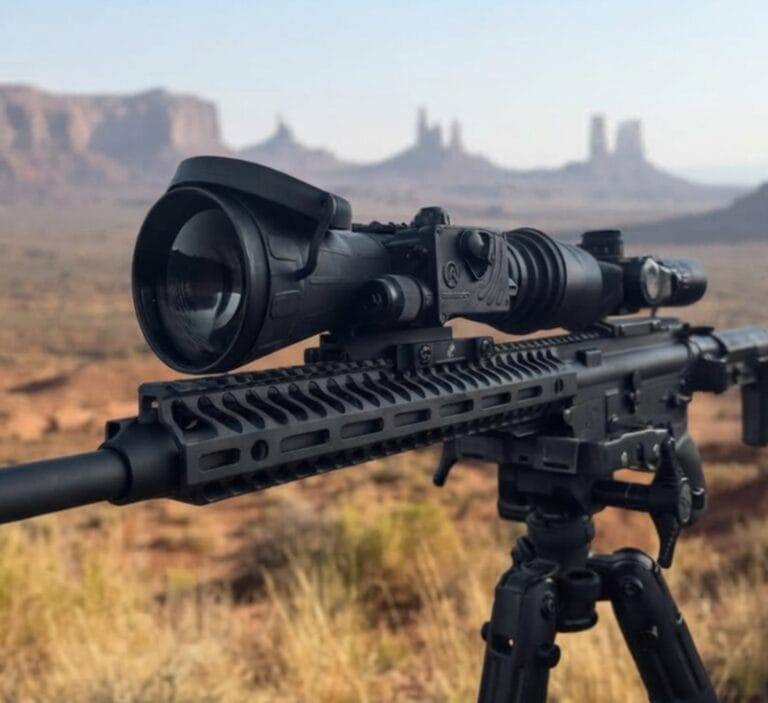
The best thermal scopes with LRF worth comparing are the AGM Rattler V3 LRF 35-384, NOCPIX BOLT L35R, Pulsar Thermion 2 LRF XQ50 Pro, and ATN ThOR 5 LRF 640 2–16x. The AGM offers a compact 384-class platform, NOCPIX emphasizes affordability and battery flexibility, Pulsar uses a conventional 30 mm scope body, and the ATN supplies a 640-class sensor with a lower native magnification. The strongest fit depends on field of view, image detail, ranging ergonomics, battery design, and price. Not the largest advertised detection distance number.
Why an Integrated Rangefinder Matters at Night
Estimating distance at night is difficult because a thermal image emphasizes temperature contrast rather than familiar surface colors and depth cues. An integrated laser rangefinder (LRF) measures line-of-sight distance to a reflective surface, reducing the need to move between a standalone rangefinder and thermal optic. Its value is clearest when target distances change or landmarks cannot be estimated reliably.
Integration also introduces trade offs: cost, size, additional controls, battery demands and the need to confirm that the laser has actually ranged the intended surface. A measured distance is not proof of species identity or a safe shot. Every user must maintain positive identification, a clear field of view, and a safe backstop.
Current LRF Thermal Options Worth Comparing
| Model | Thermal Sensor | Base Mag. | Published LRF | Key Strength |
| AGM Rattler V3 LRF 35-384 | 384×288 | 3.5× | 1,000 m | Strong sensitivity, compact form, replaceable battery |
| NOCPIX BOLT L35R | 384×288 | 3.5× | 1,300 yd | Low price for integrated LRF and ballistic features |
| Pulsar Thermion 2 LRF XQ50 Pro | 384×288 | 3× | 800 m | Traditional 30 mm scope form, dual battery system |
| ATN ThOR 5 LRF 640 2-16x | 640×480 | 2× | 1,000 yd | Wider base view, higher pixel count |
Important: Advertised LRF maximum reach is not the same as reliable ranging on an animal under all conditions. Reflectivity, angle, weather, beam placement and target geometry can change real-world results. Manufacturer detection distances describe thermal sensing, not positive identification or permissible shooting distance.
AGM Rattler V3 LRF 35-384

Best suited to: buyers prioritizing a compact, purpose-built 384-class thermal sight with integrated ranging and a removable power pack. AGM lists a 384 × 288, 12 μm thermal sensor; 35 mm f/1.0 objective; sub-15 mK NETD; 50 Hz refresh; 3.5× native magnification; and a 7.5° × 4.5° field of view. The in-lens LRF is rated to 1,000 m. The unit also lists onboard ballistic calculation, a 1920 × 1080 OLED screen, recording, IP67 ingress protection, and an interchangeable NE-4400 battery.
Why it matters: the 3.5× starting view gives a larger apparent target at distance than lower-native-magnification options, at the cost of a narrower view for scanning. The included mount and replacement battery system may reduce setup complexity. Its 384-class sensor and tighter starting field mean buyers should assess fine-image detail carefully against higher-resolution alternatives.
Who might skip it: users whose observation occurs mainly in small fields or heavy brush and who need the widest possible view.
Source: AGM Rattler V3 LRF 35-384
NOCPIX BOLT L35R
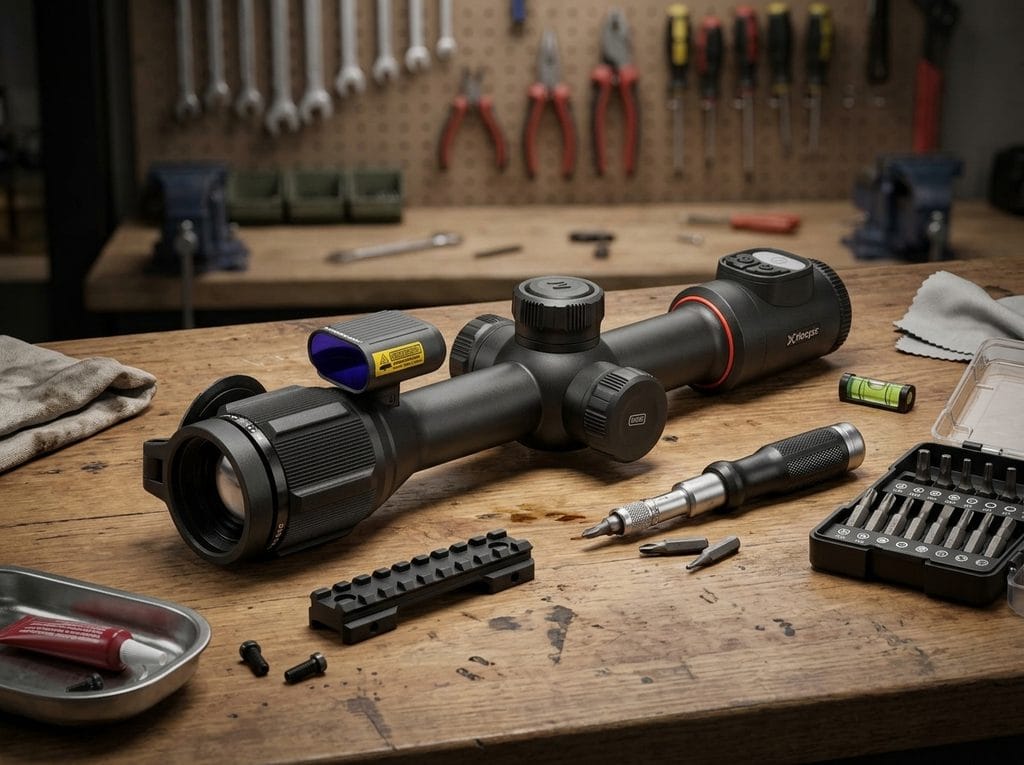
Best suited to: cost-conscious buyers who want built-in LRF functionality alongside a conventional-looking sight and flexible power design. Manufacturer specifications identify a 384 × 288, 12 μm, 50 Hz thermal detector, 35 mm f/1.0 lens, ≤20 mK thermal sensitivity, 3.5× native magnification, 7.5° horizontal field of view, and an integrated 1,300-yard rangefinder. Published features include a ballistic calculator, video recording, IP67 rating, integrated battery and removable 18650 cell.
Why it matters: a backup removable cell may be useful on longer outings, while the rangefinder reduces dependence on a separate device. A 3.5× base setting favors a closer view of distant objects rather than maximum landscape coverage. Published battery life should be interpreted under the stated test conditions.
Who might skip it: users who want a lower-magnification starting image or more thermal sensor pixels.
Source: NOCPIX BOLT L35R
Pulsar Thermion 2 LRF XQ50 Pro
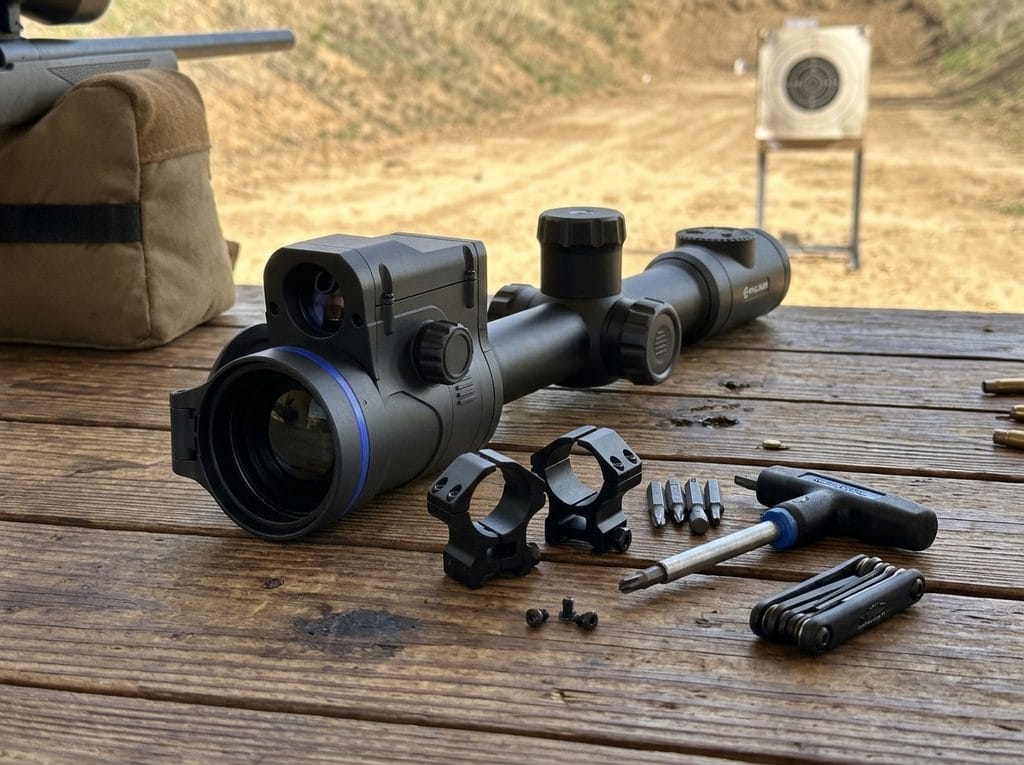
Best suited to: hunters who prefer the shape, conventional mounting rings and familiar handling of a traditional 30 mm riflescope. Pulsar lists a 384 × 288, 17 μm sensor; 50 mm f/1.0 objective; 3–12× magnification; 7.5° horizontal field of view; 800 m maximum laser ranging; sensor NETD <25 mK and system NETD <18 mK. The platform uses an internal APS5 pack and removable APS-series battery.
Why it matters: the conventional profile can be more familiar to buyers transitioning from daytime optics. The internal plus replaceable battery architecture adds flexibility. Distinguish this specific LRF XQ50 Pro from the non-LRF XQ50 Pro and newer LRF models, the names are easy to confuse.
Who might skip it: buyers who prioritize a 640-class sensor or wider native field of view.
Source: Pulsar Thermion 2 LRF XQ50 Pro
ATN ThOR 5 LRF 640 2-16x
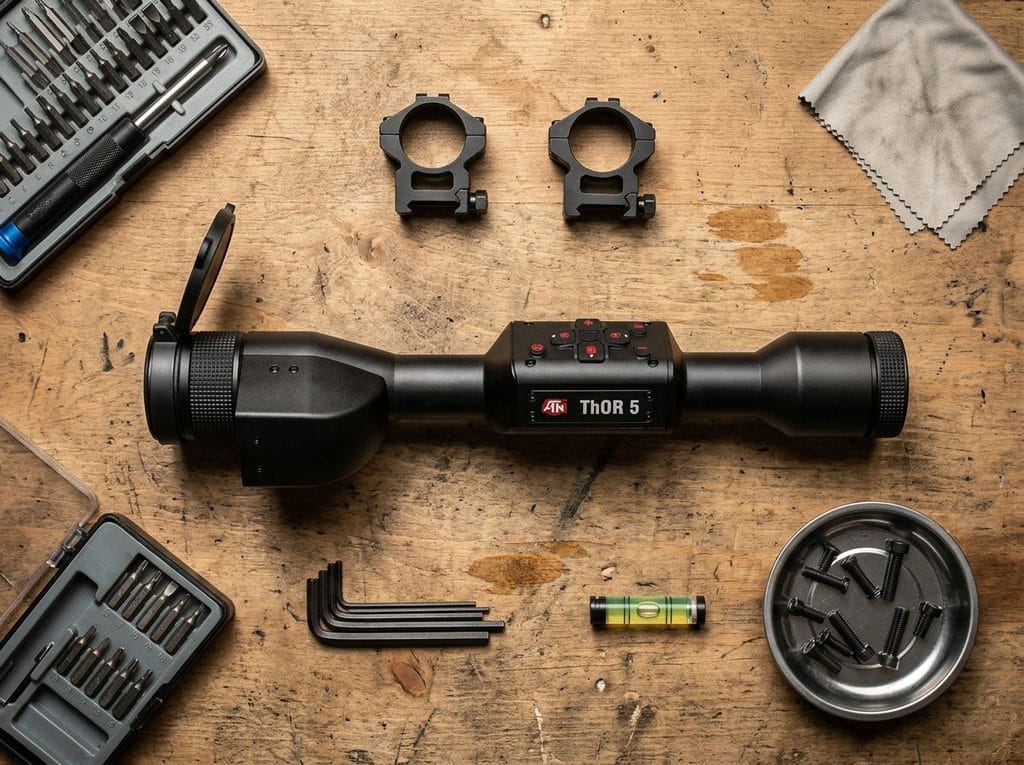
Best suited to: buyers comparing a 640 × 480 sensor against 384-class alternatives while looking for lower 2× native magnification. ATN advertises the ThOR 5 LRF 640 2–16x as a fifth-generation 640 × 480 system with integrated rangefinding and smart-scope features. The manufacturer listed $2,995 when checked in October 2026; pricing is a time-sensitive snapshot rather than a lasting recommendation.
Why it matters: the wider starting view may be advantageous for detecting and maintaining awareness of multiple objects, while more sensor samples can preserve useful detail under comparable optics and conditions. Onboard recording and connectivity may be valuable to some users but should not displace evaluation of image quality, interface, field of view and battery performance.
Who might skip it: buyers seeking the simplest possible controls, or those who prefer the ergonomics and support ecosystem of another platform.
Source: ATN ThOR 5 LRF 640 2-16x
How to select the right LRF thermal optic
1. Prioritize field of view and base magnification
Lower base magnification normally presents a wider starting scene, helping with locating and observing animals in closer or mixed terrain. Higher base magnification emphasizes distant targets but reduces visible surroundings. Compare angular field of view, not just zoom marketing claims; digital zoom reduces image resolution rather than adding optical information.
2. Separate detection, identification and LRF measurement
Detection means noticing a possible warm object. Identification demands substantially more detail, including distinguishing the subject from other animals and people. Laser ranging measures distance to what the beam reaches. These are three different tasks; strong performance in one does not guarantee the others.
3. Compare sensor resolution and NETD together
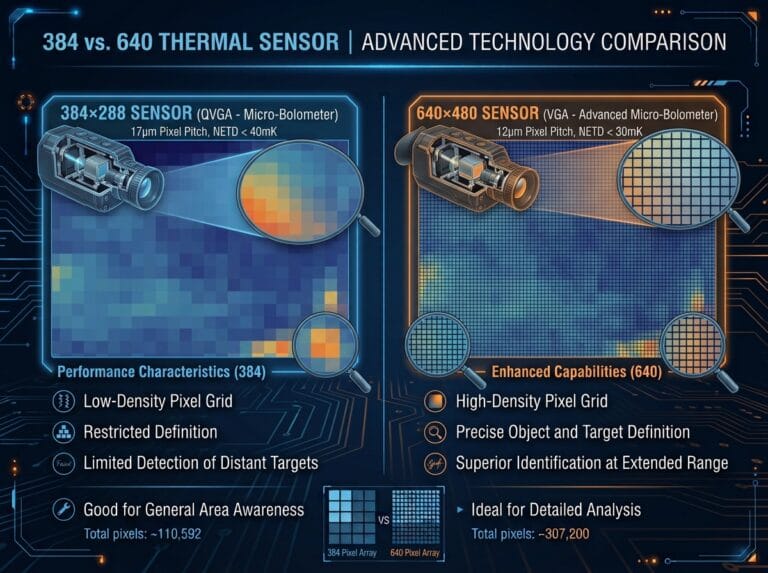
A 640 × 480 sensor captures more thermal sample points than a 384 × 288 sensor. NETD indicates the size of temperature differences the detector or system can resolve above noise under defined conditions. Lens speed, calibration, weather, image processing and screen quality also shape the observable image. Published NETD values can differ in test conditions and may represent sensor-level or system-level performance.
4. Evaluate battery and control ergonomics
Consider the number of spare batteries, ease of replacement, recharging options, expected cold-weather runtime, menu responsiveness, control position and the ability to operate the equipment in gloves. More features do not always mean faster operation.
5. Understand ballistic calculators and rangefinder limitations
An integrated ballistic calculator can combine a distance reading with user entered data, but output depends on accurate inputs and the manufacturer’s implementation. It does not verify target identity, projectile path, nearby obstructions or the safety of the environment. Never use its suggested aim point as a substitute for safe firearm handling and range confirmation.
When an LRF is worth paying for and when it is not
An LRF can justify its cost when hunting areas include varied distances and a separate rangefinder is awkward. If the property has consistently short viewing distances and recognizable, previously measured landmarks, a model without LRF may leave more budget for improved sensor detail, wider field of view or a dedicated handheld scanner. Think of the rangefinder as a solution to an actual distance estimation problem, not a universal upgrade.
Common buying mistakes
- Equating maximum thermal detection distance with confident species identification.
- Assuming a 1,000 m LRF specification guarantees accurate readings on every animal and surface.
- Comparing digital zoom values without checking base magnification and field of view.
- Comparing sensor NETD with system NETD as though they were the same metric.
- Assuming that a ballistic calculator automatically compensates for all conditions.
- Ignoring fit, warranty, firmware support, power systems and local night time hunting laws.
Legal and safety considerations
Laws on night time hunting, use of artificial illumination, thermal equipment, firearm accessories, and permitted species vary by jurisdiction and property. Confirm current regulations with the wildlife authority and landowner before use. Regardless of technology, visually confirm the subject and its surroundings and maintain a safe backstop. Thermal contrast and laser distance readings cannot establish safety by themselves.
Bottom Line
For most buyers, the best integrated LRF thermal scope is the one offering dependable image detail and an appropriate field of view at realistic observation distances, with a rangefinder that is straightforward to operate. AGM, NOCPIX, Pulsar and ATN serve distinct preferences; compare the complete system rather than selecting solely by LRF reach, sensor resolution or an advertised discount.
Frequently asked questions
Do I need a Thermal Scope with built-in Laser Range Finder
Related Articles
- Thermal Optics for Hog Hunting in 2026: How to Choose the Right Thermal Riflescope
- Best Thermal Scopes Under $3,000
- How to Choose Thermal Scope Magnification and Field of View
- How Thermal Detection Range Differs from Identification Range
AFFILIATE DISCLAIMER
Some of the links on this page are affiliate links. This means we may earn a commission at no additional cost to you if you make a purchase. This helps support our content and allows us to continue providing in-depth reviews and guides.