Overview: Does Cold Weather Reduce Thermal Scope Battery Life?
Yes. Cold temperatures can reduce the usable capacity and power delivery of thermal scope batteries, shortening runtime compared with manufacturer estimates measured under warmer conditions. Charge batteries only within the manufacturer approved temperature range, carry insulated spare packs, and use compatible external power when supported. The exact runtime reduction depends on battery chemistry, device power demand, temperature, and battery condition.

Why Your Thermal Scope Runs Out of Power Faster in Winter
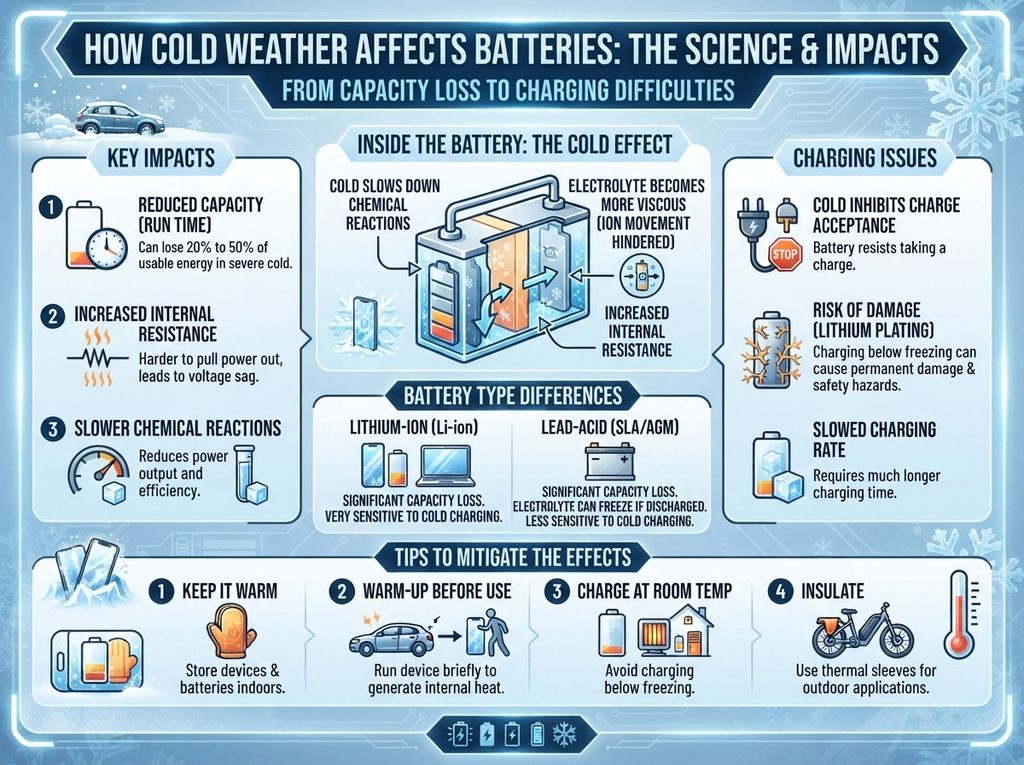
A thermal riflescope is a compact imaging computer. Its thermal detector, image processor, electronic display, onboard memory and optional Wi-Fi, video recording and laser rangefinder all consume power. Cold slows electrochemical processes within a battery, increasing resistance and reducing the energy it can deliver at a given load. A scope that operates comfortably through a mild evening may have a materially shorter operating window in freezing conditions.
This does not necessarily mean the battery is permanently damaged. A cold battery may deliver more usable performance after returning to a moderate temperature, although repeated improper charging, aging or physical damage can cause lasting losses. Battery behavior differs considerably between designs and operating conditions.
Operating Temperature Is Not Charging Temperature
The most important winter battery rule is to separate discharging from charging. Many ordinary lithium-ion cells can power equipment below 32°F (0°C), but should not be recharged below that temperature unless the specific battery and charging system are designed and approved for it. Charging standard lithium-ion cells while too cold can promote lithium plating and create durability and safety concerns. Battery University describes this distinction, and individual optic manufacturers publish their own limits.
For a battery brought indoors from subfreezing weather, allow it to return to the approved charging temperature before plugging it in. Do not use a heater, open flame or direct high heat to speed the process. If you see swelling, leakage, damage or unusual heating, stop using the pack and follow manufacturer guidance.
Source: Battery University
Battery Architectures: What Works Best on a Winter Hunt?
| Power system | Winter advantage | What to check |
|---|---|---|
| Removable rechargeable pack | Swap a depleted pack in the field | Spare cost, glove-friendly access, approved charging range |
| Built-in + removable pack | Can provide power continuity during compatible swaps | Whether hot swapping is actually supported |
| Approved replaceable cells | Potentially easy sourcing of spares | Exact chemistry, voltage and manufacturer compatibility |
| USB-C external power | Can lengthen a stationary hunt | Input specification, connector protection, cord routing |
The number on a product page is only one part of the purchasing decision. A scope with slightly shorter advertised runtime but rapid, reliable battery swaps may be easier to manage over an entire winter night than a sealed system with no practical backup. Conversely, an integrated battery combined with a removable pack may help avoid interruptions if the particular model supports continuous power during the exchange.
Real Manufacturer Examples: Compare the Systems, Not Just the Hours
Published product figures below are manufacturer claims, not side-by-side winter test results. They are not normalized to the same temperature, display brightness or feature settings.
| Scope | Published runtime / system | Winter takeaway |
|---|---|---|
| AGM Rattler V3 LRF 35-384 | Up to 7 hours; removable rechargeable NE-4400 battery | Swap-capable design; AGM lists two batteries in the box |
| Pulsar Thermion 2 XQ50 Pro | 10 hours at 22°C for specified built-in/removable battery configuration | A warm-condition reference point, not a freezing-weather guarantee |
| NOCPIX BOLT L35R | 6+ hours; built-in pack, removable 18650 and USB-C external source | Multiple supported power options; inspect exact model and cell requirements |
Before purchasing spare batteries, confirm the exact scope generation and battery part number. A manufacturer may revise specifications between closely named models or different regions.
Source: AGM Global Vision , Pulsar , NOCPIX
Primary Lithium AA vs. Rechargeable Lithium-Ion
Primary lithium AA cells and rechargeable lithium-ion packs are different chemistries and should not be treated as interchangeable. Energizer specifies its L91 lithium/ion disulfide AA cell for operation as low as -40°C, subject to the datasheet conditions [6]. That can make approved lithium AA powered equipment attractive in extreme cold. But L91 cells are not rechargeable, and their 1.5 V nominal chemistry does not permit substitution into a device designed for a rechargeable 3.7 V lithium-ion cell or a proprietary battery pack.
Rechargeable lithium-ion systems remain common because they offer useful energy density, recharging convenience and configurable pack designs. For the typical winter hunter, compatibility, pack accessibility and extra charged batteries are more useful selection criteria than broad chemistry claims.
How to Plan Enough Battery Power for an Entire Hunt
Use a simple planning method. First, estimate your actual time in the field, including travel, scanning, waiting and the trip back. Next, establish a realistic baseline from your own optic at similar brightness and usage settings. Then apply a conservative reserve rather than assuming the advertised maximum will hold in winter.
Illustrative planning example — not a performance claim
Suppose you expect to be out for six hours and a scope is advertised for seven hours under the maker’s test conditions. That one-hour paper margin is too narrow to count on when temperature drops and video recording, wireless functions or rangefinding are used. Bring an approved spare or external power source, and verify before departure that it works with your setup. Actual spare quantity depends on your own measured runtime and trip duration.
A quick pre-hunt battery check
- Charge each battery within its specified temperature range and inspect for damage.
- Test installed and spare packs in the optic before leaving home.
- Check the USB-C input requirement if you plan to use external power.
- Keep a compact backup plan for a failed cable, connector or battery.
- Record the start and end battery levels on your next cold weather outing to improve future estimates.
Eight Practical Ways to Extend Cold Weather Thermal Scope Runtime
- Keep spare packs in a protected inner pocket, away from exposed cold and loose metal objects that could short terminals.
- Start with a charged battery and allow the scope to operate only within its rated environmental limits.
- Lower display brightness to a usable level; avoid unnecessary maximum settings.
- Switch off Wi-Fi or streaming when it is not needed.
- Use recording and other optional powered features deliberately rather than leaving them continuously active.
- Use standby or display off settings only as the manual permits, and understand whether the device remains powered.
- Use manufacturer approved power banks and cables; secure cords so they do not snag, interfere with operation or compromise seals.
- Carry more than one usable power source for long remote hunts and keep a reserve for the return trip.
Cold Weather Field Scenarios
Stationary hog hunting
A blind or stand makes a compatible external pack a practical option: the battery and cable can be secured and protected from rain, snow and snagging. Verify that the optic accepts external power and that its connection does not compromise safety or weather protection.
Mobile predator calling
When moving between stands, simple battery changes matter. Favor readily accessible spares, glove friendly battery covers and a short startup sequence. It is usually less convenient to manage a dangling external cable while moving through brush.
Extended ranch or property monitoring
Repeated scanning sessions can add up quickly. Consider a power plan for both your weapon mounted optic and any handheld thermal monocular. Spares are more valuable when they are compatible with the exact equipment you carry; do not assume batteries are interchangeable merely because both devices use lithium-ion chemistry.
Troubleshooting: Thermal Scope Battery Problems in the Cold
The scope switches off early
Replace the battery with a known good, approved warm spare. Check terminals and battery seating, inspect for damage, and compare behavior at a moderate temperature. If the issue persists, consult the model specific support instructions rather than assuming cold is the only cause.
The battery indicator drops suddenly
The battery gauge is an estimate based on electrical behavior and device firmware. Cold related voltage sag can make the displayed percentage less predictable under a load. Use spare power rather than attempting to drain a struggling battery completely.
The scope does not charge after a freezing hunt
Disconnect it and let the battery return to the approved charging temperature. Check for moisture and inspect the connector before restarting charging. If the manufacturer requires battery removal or gives a warm up interval, follow that instruction.
A USB-C power bank disconnects intermittently
Check whether the source meets the scope’s stated power requirements and whether the cable, connector and sealing arrangement are approved for field use. External battery packs also lose performance in cold conditions.
Common Winter Battery Mistakes
- Treating advertised room temperature runtime as a guaranteed winter figure.
- Charging a cold lithium-ion pack immediately after bringing it in from freezing temperatures.
- Substituting batteries based only on their physical shape.
- Buying a spare pack without checking model and firmware compatibility.
- Assuming a power bank is weatherproof because the thermal optic is.
- Leaving recording, display or wireless features enabled without accounting for their energy demand.
What to Look for When Buying a Cold Weather Thermal Scope
For hunters who routinely operate below freezing, evaluate battery replacement speed, the availability and price of spare packs, manufacturer operating temperature ratings, approved charging limits, external power compatibility and display off features. A reliable service and warranty program matters as well. Thermal image quality still matters, but great sensitivity or sensor resolution does not help much if the device is unavailable when you need it.
Conclusion
Cold weather should change how you plan power, not necessarily which hunt you take. The essentials are straightforward: understand the difference between operating and charging limits, carry approved spare power, reduce unnecessary energy demand and test your actual setup in conditions that resemble your hunt. The most useful winter optic is one that combines dependable imaging with a battery system you can maintain in the field.
Frequently Asked Questions
Does Cold Weather Reduce Thermal Scope Battery Life?
Get the Best Gear Deals & Field Insights
Stay updated with top gear recommendations, reviews, and exclusive deals.