Overview: Detection Is Not Identification
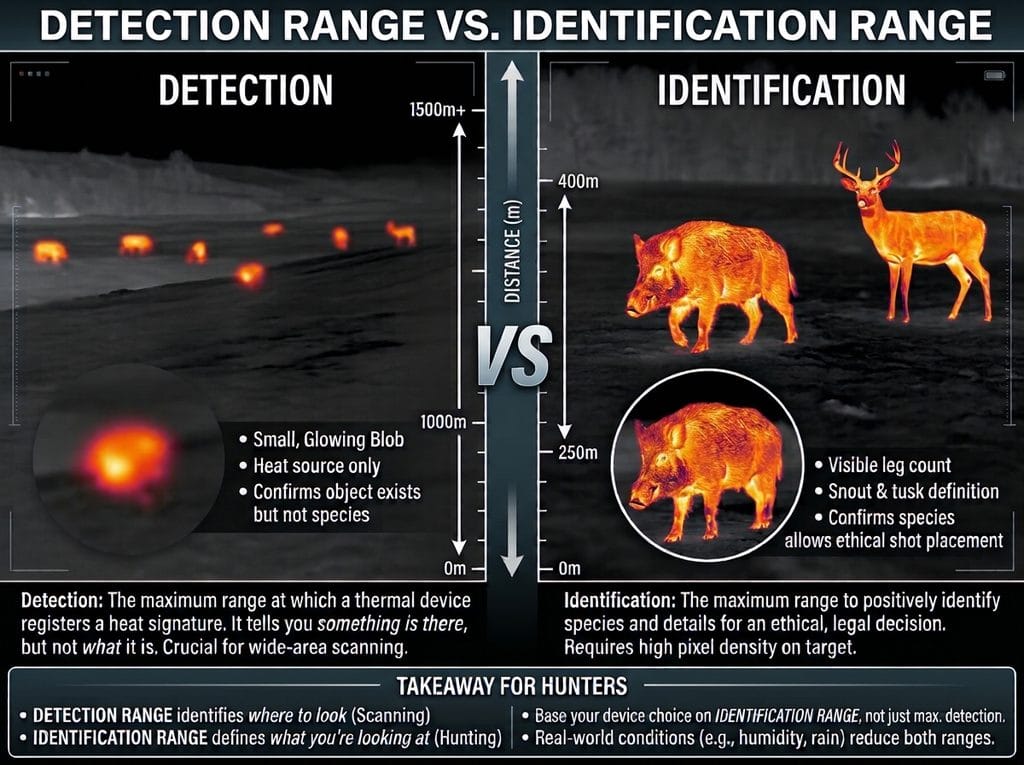
Thermal detection range is the distance at which an imaging system can indicate that a target sized heat source is present. Recognition requires enough information to be able to determine the subject, while identification requires enough detail for a concise determination. A thermal scope that can detect a heat signature at a long distance may not provide enough information to identify the animal at that distance. Detection specifications are not safe or reliable shooting distance guarantees.
Why This Difference Matters
Published thermal specifications commonly emphasize maximum detection distance. That number is useful, but it answers a narrow question: can the system reveal that something is there under defined conditions? For hunters, landowners, and wildlife observers, that is only the beginning. The information needed to distinguish a hog from livestock, another animal, or a person can demand substantially more visual detail than the information needed to notice a heat signature.
A more informed purchase compares the intended subject, actual observation distances, field of view, optical system, image quality, and prevailing weather, not a single maximum range claim.
Detection, Recognition, and Identification (DRI): Three Different Tasks
| Task | What it answers | What it does not establish |
| Detection | Is a target-sized object or heat signature present? | Animal species, identity, or suitability for any shot |
| Recognition | What general class or type of object is visible? | Certain identification of a particular species or individual |
| Identification | Is there sufficient detail to distinguish the subject for the specific task? | An automatic assurance that shooting is lawful or safe |
Detection: Finding a heat signature
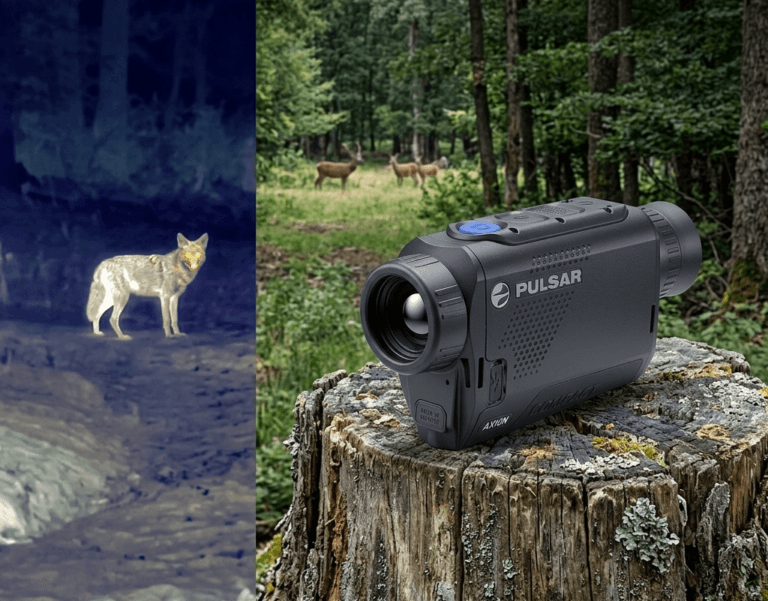
Detection may require relatively little image information. A warm object can appear as a small cluster of pixels even when its outline is indistinct. Detection depends not only on target size, but also thermal contrast, sensor noise, atmosphere, background clutter, optics, and the observer or algorithm.
Recognition: Distinguishing a general category
Recognition is more demanding. An observer might determine that the heat signature resembles a four legged animal instead of a person or stationary object. The result may remain uncertain when only a few resolved image samples describe the subject or the animal is partly obstructed.
Identification: Resolving decision, relevant details
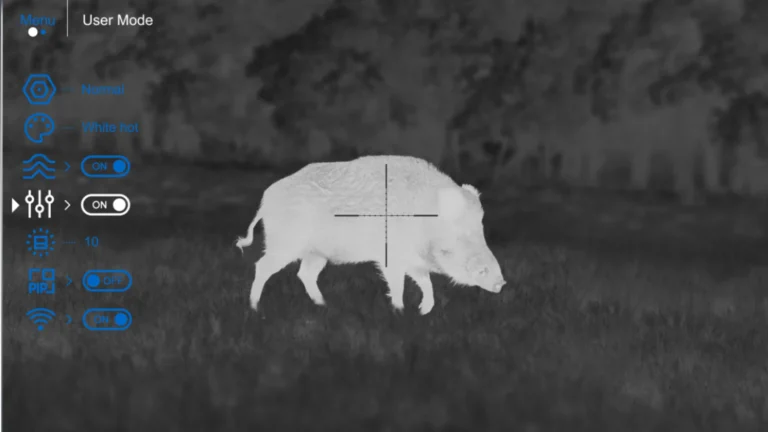
Identification requires sufficient visual evidence to establish what the subject actually is for the intended purpose. A broadside animal in the open may present distinctive size, shape, and movement, while a partially concealed or head on subject may remain ambiguous. The same optic can therefore have different practical identification performance depending on the target and conditions.
Critical safety distinction: optical identification capability is not synonymous with a safe shot. Legal permission, positive target identification, a clear line of sight, and knowledge of what lies beyond the subject are separate requirements.
Why Advertised Thermal Detection Numbers Look So Large
A high detection range figure is not inherently false. It often reflects a modeled or measured threshold for a specified target size and set of conditions. Because noticing a small contrasting object takes less detail than classifying or identifying it, the maximum detection number can be far larger than the distance where an observer confidently interprets the target.
Manufacturers may use different target dimensions, contrast assumptions, detection probability thresholds, weather models, and processing methods. Two published distances are not necessarily apples-to-apples, unless the methods and assumptions match. Do not use a detection figure as a proxy for animal-identification range.
What Determines Practical Thermal Identification Range?
1. Sensor resolution and actual pixels on target
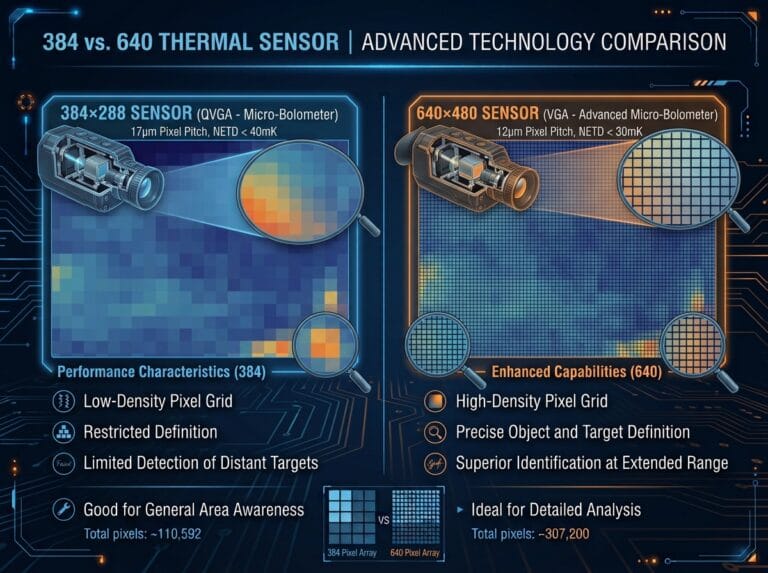
Detector formats such as 256×192, 320×240, 384×288, 640×480, or 640×512 refer to samples available across the scene, not guaranteed identification distances. All else equal, more detector pixels can preserve more information about a distant subject. But total pixel count by itself does not describe how many pixels span a specific animal: the lens and field of view matter just as much.
2. Lens focal length, field of view, and pixel pitch
A longer focal length lens commonly provides a narrower view and can project a more distant target across a larger portion of the sensor when comparing otherwise similar systems. That can improve apparent detail at distance, but it sacrifices the wide area visibility valuable for scanning. Pixel pitch and effective focal length also influence the angular sampling of the scene. A 35mm lens does not, by itself, guarantee better identification than every 25mm design.
3. Thermal contrast and NETD
Thermal contrast is the difference in apparent infrared signal between the subject and its background. NETD (noise equivalent temperature difference) describes sensitivity to small temperature differences under specified measurement conditions. Lower NETD values are generally favorable when comparisons are truly equivalent, but manufacturers can report figures under different test conditions. NETD is only one part of system image quality.
4. Target size, position, and partial obstruction
A large animal presenting a full broadside silhouette offers more potential identifying information than a smaller animal facing directly toward the observer. Vegetation can break up the outline, and thermal optics cannot see through solid trunks, heavy brush, or other opaque objects. Animal movement can sometimes help interpretation but should never be treated as proof of identity.
5. Atmosphere, weather, and time of day
Water vapor, fog, rain, atmospheric absorption, and distance can reduce transmission and contrast in the long-wave infrared band. A clear, cooler evening may provide visibly different contrast from a warm, humid night. The same device can therefore appear sharper or flatter without any change to its published specification. Thermal imaging does not reliably see through dense fog, heavy rain, or opaque obstacles.
6. Focus, display, processing, and the human factor
Manual focus, optical quality, nonuniformity correction, contrast palettes, sharpening, display resolution, and viewing conditions all influence what the observer can interpret. Processing can make edges look more pronounced without recreating scene detail that the detector did not capture. Digital zoom enlarges existing image samples and should not be confused with additional native optical resolution.
Detection Range vs. Identification Range: Practical Comparison
| Example situation | What thermal may show | Responsible interpretation |
| A distant bright point in an open field | A contrasting heat signature | Detected object; identity still unknown |
| A closer moving four-legged outline | General body shape and movement | Possible recognition; species may remain uncertain |
| Clear, sufficiently detailed view at an appropriate distance | Distinctive characteristics consistent with a particular animal | Identification may become possible; verify independently and apply all safety rules |
| Partially obscured animal beside livestock | Fragmented or ambiguous heat patterns | Do not infer species or identity from the heat spot alone |
A Real-World Optics Tradeoff: 25mm vs. 35mm
Consider two similarly designed 384-class thermal optics, one with a 25mm lens and one with a 35mm lens. The 35mm variant may give greater optical image scale for distant subjects while presenting a narrower field of view. The 25mm variant may be preferable for viewing wider fields or woodland edges where situational awareness matters. Neither focal length is universally superior. Compare complete lens/sensor configurations as well as the distances and spaces you actually observe.
Illustrative comparison only: this example does not assert a specific range, identification distance, or performance specification for a real product.
How DRI Models and Johnson Criteria Should Be Used
DRI estimates frequently draw on Johnson criteria concepts that relate image resolution and task difficulty. More advanced prediction approaches, including the Night Vision Integrated Performance Model (NV-IPM), account for additional system and environmental variables. In practice, prediction depends on target properties, optics, detector, processing, atmosphere, display, and assumptions about the observer or algorithm.
Treat DRI estimates as conditional engineering or comparative tools, not fixed promises. A model’s identification label describes performance under its particular assumptions and task definition; it does not automatically confirm an observer can distinguish hogs from other animals in the field.
How to Read a Thermal Scope Specification Sheet
When comparing optics, begin with the published detection figure, then ask which target dimensions, temperature differences, atmosphere, lens, and calculation method produced it. If no methodology is supplied, treat the number as a marketing reference rather than a verified field limit.
Next, compare detector resolution and pixel pitch, native lens focal length, base optical field of view, NETD measurement conditions, refresh rate, focus, display, power consumption, weather protection, and warranty. Finally, assess available real world sample footage taken at known distances in conditions comparable to your own use. Avoid judging by short, heavily processed promotional clips (commercials) alone.
Buyer Checklist: Matching an Optic to Its Job
- Define whether your primary task is wide area detection, observation, or high-confidence animal identification.
- Estimate realistic observation distances in your terrain without treating them as shooting range recommendations.
- Compare native optical detail and field of view together; avoid choosing on digital zoom numbers alone.
- Look for clear disclosure of how manufacturer detection claims were determined.
- Examine image samples across varying contrast, weather, and target orientations.
- Budget for batteries, mounting or handheld accessories, service support, and warranty.
- Verify the laws and regulations governing the species, location, and equipment.
Common Misconceptions
“A 2,000 yard detection rating means I can identify a hog at 2,000 yards.”
No. Detection requires substantially less image information than recognition and identification.
“A 640 sensor always identifies farther than a 384 sensor.”
Not necessarily. The lens, angular pixel scale, sensitivity, atmosphere, and processing can change the comparison.
“Digital zoom increases the sensor’s real resolution.”
No. It enlarges sampled information; it does not replace the detail captured by additional detector pixels.
“Thermal sees through trees or fog without limits.”
No. Solid obstructions block relevant radiation, and dense precipitation or fog can substantially impair performance.
“Identification range is the same as safe shooting distance.”
No. Target certainty is only one component of a legal and safe decision.
Bottom Line
Thermal detection range tells you how far an imaging system may notice a target, like heat signature under defined conditions. Recognition and identification demand more detail. For hunters, advertised detection distance should be treated as a comparative technical specification, not a promise of positive identification and never a safe shooting range recommendation. Evaluate the entire imaging system and the real conditions in which it will be used.
Frequently Asked Questions
Thermal Detection Range vs. Identification Range: What Hunters Need to Know
Recommended Articles
- Thermal Optics for Hog Hunting in 2026: How to Choose the Right Thermal Riflescope.
- How to Choose Thermal Scope Magnification and Field of View.
- 384 vs. 640 Thermal Resolution: What Hunters Actually Gain.
- What NETD Means on a Thermal Scope.
- Thermal vs. Night Vision for Hog Hunting: Which Technology Fits the Hunt?